
The affiliate program with the biggest commission number is rarely the one that pays the most. A generous rate on a product with high returns, a one-day cookie and a ninety-day holdback can produce less cash than a modest rate on something people keep. The maths is simple, but the terms are buried in a page nobody reads until the first payment is late.
This guide is about choosing a program the way you would choose a supplier: by reading the contract, testing the payout and understanding what happens when a customer changes their mind. The headline rate is the last thing to look at, not the first.
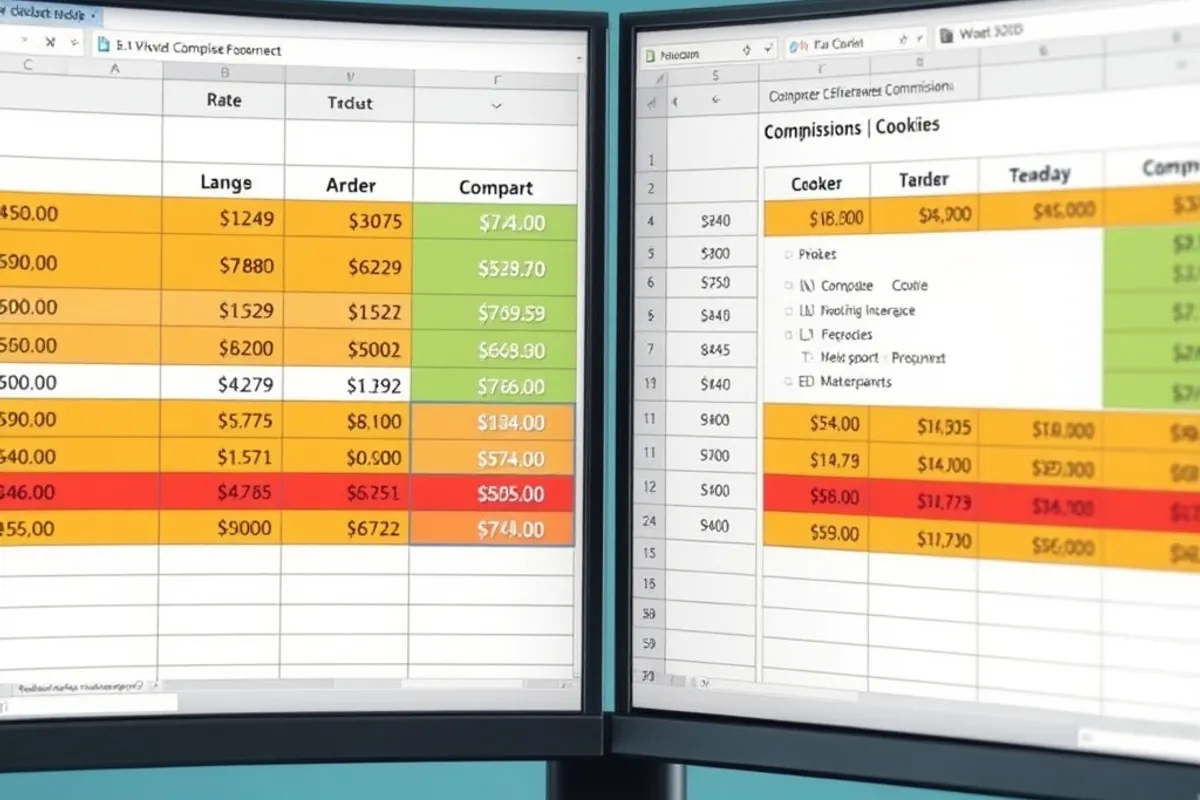
Read the terms before the rate
Start with the definitions. What counts as a qualifying sale? Is it a first purchase, a subscription renewal or any order? Is the commission paid on the subtotal or after discounts and tax? A rate applied to a smaller base is not the rate on the page.
Then find the exclusions. Gift cards, sale items and existing customers are commonly excluded. If most of your audience already owns the product, a program that only pays for new customers will produce clicks and no commission. Read the section on prohibited traffic too, because a single unclear rule can void a month of work.
Cookie windows and attribution
A cookie window is the time between the click and the purchase that earns you credit. A twenty-four-hour window suits an impulse buy. A considered purchase, such as software or a course, may take weeks. If the program credits only the last click, a review that started the research can lose the sale to a coupon site at checkout.
Look for a program that offers a reasonable window and clear attribution. Some networks report the click date and the conversion date, which lets you see how long your audience takes. If the data is not available, ask before you invest in a long buying guide.

Returns, chargebacks and holdbacks
A sale is not income until the return window closes. Programs that pay on a short cycle but claw back refunds later create a cash-flow trap: the money arrives, gets spent, and then disappears. Check the holdback period and the policy for chargebacks and fraud.
High-ticket categories with generous return policies need a higher commission to compensate for the reversal risk. A ten percent commission on a product with a twenty percent return rate is effectively an eight percent commission before costs. Model the net, not the sticker.
Commission is a promise. The payment terms decide whether the promise becomes money.
Payment thresholds and currency
A low threshold is a sign of a program that expects small publishers. A high threshold can lock your earnings for months if your volume is modest. Check the threshold, the payment schedule, the minimum payout currency and who pays the transfer fee.
Currency matters if your audience and the merchant are in different markets. A payout in a currency you cannot hold cheaply loses value in conversion. Ask whether the program pays in your local currency and whether the exchange rate is set at the sale or at the payout.
Niche fit and audience trust
The best program is one your audience would thank you for recommending. If the product solves a problem your readers already have, the content writes itself and the conversion rate reflects genuine interest. If it does not, no commission rate will make the recommendation believable.
Test the product before you promote it. A program that will not send a review copy or a trial is asking you to vouch for something you have not used. That is a bad trade, even at a high rate, because the cost of a broken recommendation is paid in trust rather than in refunds.

Diversifying without diluting
One program is a single point of failure. A terms change, a tracking outage or a merchant going out of business can remove a large share of income overnight. Two or three well-chosen programs in the same niche spread the risk without turning the site into a coupon wall.
Diversify by customer need, not by merchant count. If all three programs sell the same category, a market shift hits all of them at once. If one serves beginners and another serves teams, the income is more stable and the content is more useful.
A scorecard for a new program
- Net commission after returns, discounts and tax.
- Cookie window and attribution model, with real conversion lag data.
- Holdback period, payment threshold and payout currency.
- Excluded traffic, coupon rules and brand bidding policy.
- Product quality and whether a review copy is available.
- Account manager responsiveness before you join.
For the content side of the same work, read our guide to affiliate content that converts without breaking trust. For the links that bring the audience, see our Link Building section.